Introduction
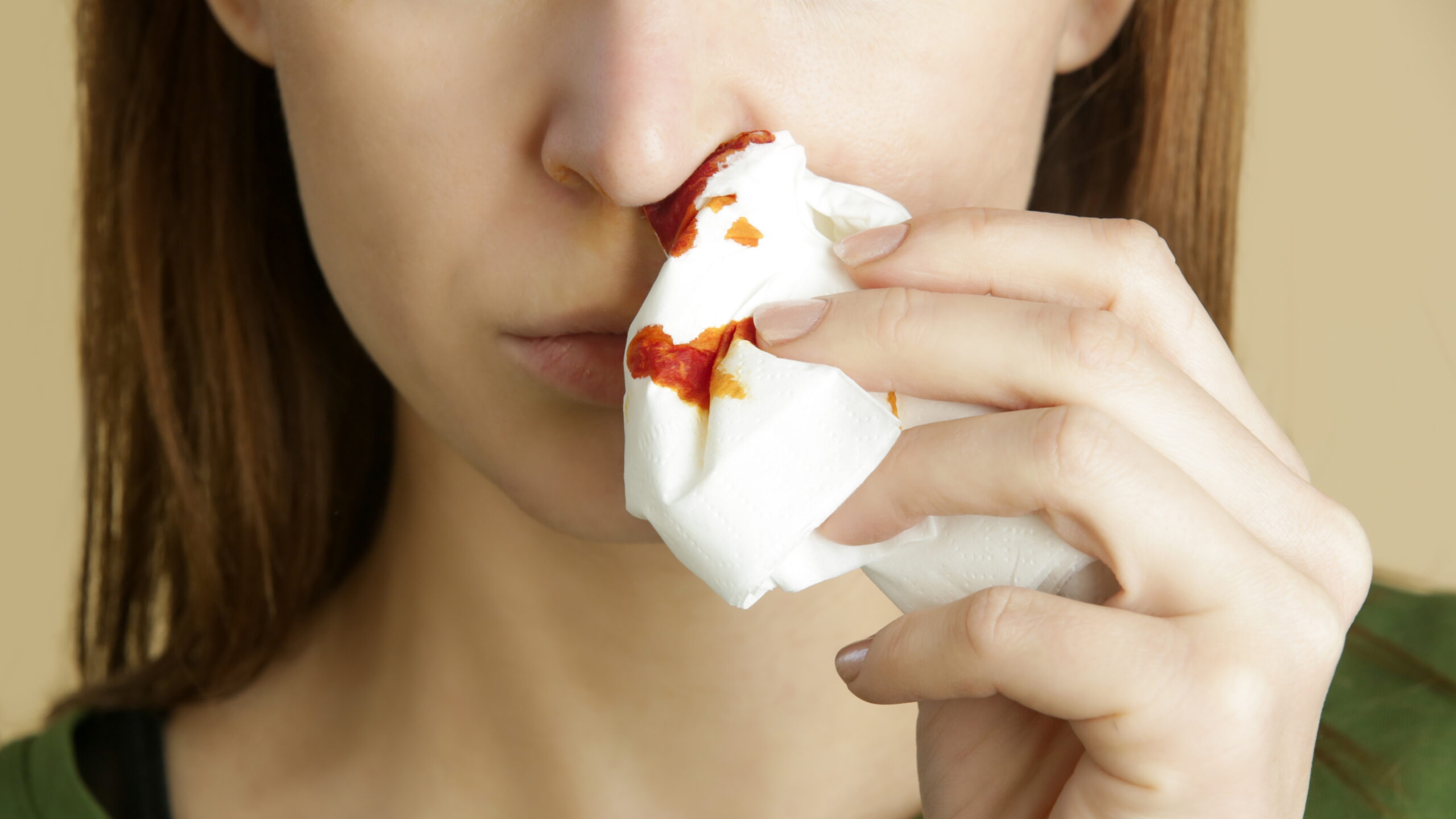
Nose bleeds also known as Epistaxis is a commonly occuring condition. More than 90% of all nose bleeds occur at the front part of the nose as there are major blood vessels that supply the septum (midline structure of the nose).
Due to the constant airflow during breathing this part of the nose remains dry. So any abrasion to the thin lining of the septum can cause a rupture of the blood vessels.
Types
Nose bleeds or Epistaxis is mainly Two Types
- Anterior : Most of nose bleed (Epistaxis) fall in this category. This can be treated relatively easily.
- Posterior : This occurs less frequently but must be taken seriously when it occurs. It is seen commonly in elderly peoples.
Risk Factors
Some patients are at higher risk than the general population. Some factors that increases the risk of nose bleeds are :
- Bleeding disorders
- Use of blood thinning medications for cardiac diseases or other diseases. (eg. Warfarin)
- Previous Surgery
- Hypertension
When such risk factors are present, sometimes it might be difficult to control the bleeding.
Causes
Nose bleeds can occur due to various causes but most common of which are as follows:
- Nose picking
- Trauma
- Spontaneous (Mostly due to dry nose.)
- Infection
- Allergy
Prevention
Since majority of the nose bleeds are due to nose picking and dry nose, it is possible to reduce the chances of nose bleeds (Epistaxis). Simply keep your nails short and keep your nose moist in dry environment by spraying Saline nasal drops. Also don’t forget to keep your blood pressure under control.
First Aid

Dos and don’ts in Nose Bleeds (Epistaxis).
Do Not’s :
- Don’t panic.
- Don’t tilt your head back (Blood may flow down the airway and cause choking.)
- Do not pinch the hard upper part of the nose as this does nothing.
Do’s :
- Stay calm and sit down.
- Put your head in a slight forward position.
- Apply firm pressure over the soft lower part of your nose.
- Wait for 10 to 15 minutes and most bleeds will stop.
First aid care can be given in similar way to children by parents.
When to Seek Medical Help
If bleeding from the nose does not stop after 10 to 15 minutes after first aid, consider seeking medical help.